


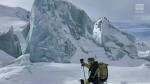
 Ghiacciai più elevati del Monte Bianco
Qualche esperto potrebbe spiegare come mai, secondo quanto pubblicato in questo studio, i ghiacciai d'alta quota del Monte Bianco sembrerebbero non subire (finora e per ora) il trend climatico improntato al caldo del XX secolo?
Mi sembra altresì strano che il bilancio di massa di questi ghiacciai d'alta quota dipenda praticamente solo dalle precipitazioni, com'è scritto nell'abstract.
Very high-elevation Mont Blanc glaciated areas not affected by the 20th century climate change
Vincent, C., E. Le Meur, D. Six, M. Funk, M. Hoelzle, and S. Preunkert (2007), Very high-elevation Mont Blanc glaciated areas not affected by the 20th century climate change, J. Geophys. Res., 112, D09120, doi:10.1029/2006JD007407
Abstract
This paper analyses the impact of climate change over the last 100 years on high-elevation glaciated areas of the Mont Blanc range, comprising ice fields covering the top of the Mont Blanc (4808 m) and Dôme du Goûter (4300 m) areas. Surface ablation is negligible for these high-elevation areas and the surface mass balance is mainly controlled by snow accumulation. At Dôme du Goûter, ice fluxes have been calculated through two transversal sections by two independent methods in order to assess long-term surface accumulation. A comparison between these results and recent accumulation observations, together with the strong relationship between valley precipitation and snow accumulation, suggests that surface accumulation rates did not change significantly over the entire 20th century. Moreover, the small ice thickness changes, less than 3 m on the average, observed at Mont Blanc and Dôme du Goûter between 1905 and 2005 clearly reveal that these high-elevation glaciated areas have not been significantly affected by climate change over the last 100 years.
~~~ Always looking at the sky~~~
Re: Ghiacciai più elevati del Monte Bianco
Per quanto ne so io, effettivamente i bacini del Bianco, ma anche quelli del Rosa, situati oltre i 3900-4000 metri, non hanno subito ancora gli effetti del GW. In passato ho effettuato numerosi confronti fotografici dei vari plateau dei due massicci e delle zone sommitali, ma non ho riscontrato alcuna variazione significativa. Il periodo interessato è quello 1883-2005Originariamente Scritto da steph

Il riferimento alla forma di accumulo esclusivamente diretta è ascrivibile alla mancanza di alimentazione indiretta, ovvero di valanghe, in quanto si tratta di zone aperte, senza rilievi importanti attorno, e quindi sotto l'effetto delle sole precipitazioni dirette

 Re: Ghiacciai più elevati del Monte Bianco
penso sia così, l'aumento medio delle temperature ancora non ha interessato le quote oltre 4000m in maniera così intensa da provocare variazioni significative sui ghiacciai
https://meteoravanel.it/ webcam realtime e dati meteo da oltre 15 punti di osservazione e monitoraggio a Vittorio Veneto e Pian Cansiglio
Re: Ghiacciai più elevati del Monte Bianco
...diciamo anche che la T a quelle quote, poche volte va sopra lo 0°C , e se lo fa, è per poco tempo, quindi la poca neve e ghiaccio che si scioglierebbe, viene abbondantemente compensata dalla neve che cade quasi sicuramente a ogni evento perturbato....e spesso d'estate quando ci sono i temporali, in poco tempo può cadere anche 1/2m o 1m di neve fresca...basta immaginare gli eventi temporaleschi scorsi che hanno colpito l'alto Piemonte e l'alta Lombardia, che hanno portato punte nettamente superiori a 100mm di pioggia...se tali eventi si manifestano anche a quelle quote portano sicuramente notevoli accumuli nevosi!
 Permessi di Scrittura




 Rispondi Citando


Segnalibri