



 Re: Atene, che forno!
Io ho passato pochi giorni ma per 3 estati consecutive, forse 4, e per quanto minuscola fosse la mia esperienza, almeno in quei giorni mi pareva che il clima fosse secco perchè il Meltemi soffiava abbastanza costantemente ed è un vento continentale che arriva da nord, ergo secco.Originariamente Scritto da mesogeiakos

Non sapevo che i greci fossero così litigiosi.
Re: Atene, che forno!
Di notte Atene fa peggio...
Re: Atene, che forno!
In realtà, il Meltemi non incide Atene molto .... da Nikea ea nord la città non è influenzata dal Meltemi. La siccità proviene dal ombra di pioggia che viene creato dalle montagne intorno ad Atene.Questo è meglio .... sarebbe molto pericoloso avere umidità con temperature estive così alti
*I greci sono famosi per le loro divisioni. Abbiamo avvelenato Socrate, noi esuli Melina Merkouri, abbiamo ucciso Kolokotronis etc
Re: Atene, che forno!
Insopportabile notti d'estate .. a / c è sempre ''on'' in estate ... è difficile respirare alcune notti!!Inferno
Re: Atene, che forno!
Sì,un misto di Roma e Milano moltiplicato per tre,temo...
Re: Atene, che forno!
Qual è la Tmin a Roma durante l'estate? Penso che Roma è umida nelle notti d'estate ...
Re: Atene, che forno!
Pensa che a Manila è la norma
Re: Atene, che forno!
Non sempre, comunque 17-21°C a seconda delle notti più o meno fresche
Re: Atene, che forno!
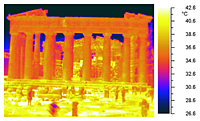
Thermal image of the Parthenon
ESA helps make summer in the city more bearable
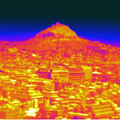
As temperatures soar, scientists have been collecting data amid the ancient ruins that symbolise the birthplace of western culture. These data, combined with measurements from aircraft and satellites, promise to improve 'urban heat island' forecasts to make life in modern-day Athens easier during heat waves.
Heat waves strike with relative frequency in the summer months across southern Europe but the Greek capital of Athens is notorious for its sweltering conditions. The city is particularly prone to high temperatures because of its dense layout, narrow streets, limited green space and long-standing air pollution problem. While the average daytime temperature for July is 33.5ºC, statistics show that the number of days that exceed 38ºC appears to be increasing dramatically.
Measurements at the Parthenon
Periods of hot weather are always felt more acutely in cities, especially at night. This is down to a phenomenon called an urban heat island, where the temperature in the city can be up to 10ºC higher than the surrounding countryside. The built-up urban environment tends to act like a giant storage heater, soaking up the heat during the day and releasing it at night. Air pollution, traffic, lack of open space and low evaporation also contribute to the heat of the city. In addition, appliances such as refrigerators and air conditioners have to work harder as the temperature rises. In turn, this adds more heat to the environment causing the situation to worsen.
Increased daytime temperatures and reduced night-time cooling have a huge impact on human health and comfort. Urban heat islands are associated with above-average rates of mortality, especially amongst the elderly. This is sadly illustrated by the 10-day heat wave that engulfed Athens in 1987 and responsible for claiming 926 lives. During this extreme event, the mercury climbed to 48ºC – the all-time highest temperature recorded for metropolitan Athens.
In order to improve our understanding of the complexities of how urban heat islands arise, so that more efficient alert systems can be developed and effective mitigation strategies adopted, ESA organised an airborne campaign that was recently carried out over Athens.
In a series of coordinated activities, a group of thermal remote-sensing and urban-climate experts from Greece and Spain carried out ground-based measurements at various sites in and around the Greek capital, whilst aircraft equipped with sensitive instrumentation passed overhead and satellites orbiting Earth acquired data simultaneously from space.
INTA aircraft and crew
The campaign, called Thermopolis 2009 from the classical Greek terms for hot (thermo) and city (polis), was led and coordinated by Prof. Spyridon Rapsomanikis from the Democritus University of Thrace. It was carried out as part of the Urban Heat Islands and Urban Thermography project within the framework ESA's Data User Element. Four Greek administrations also participated in the project: the city of Athens, the municipality of Amaroussion, the Hellenic National Meteorological Service and the General Secretariat for Civil Protection.
Prof. Rapsomanikis pointed out that, “Although the objectives of the Thermopolis 2009 project targeted the needs of ESA's Urban Heat Island and Urban Thermography Data User Element project, the generated dataset will, as an unavoidable by-product, generate unique scientific insight into the thermal budget of cities.”
The campaign follows a similar exercise successfully executed last summer in the city of Madrid, Spain, called the DESIREX 2008 campaign. The Thermopolis campaign in Athens began on 18 July, when two aircraft made simultaneous flights over the city. One aircraft, operated by INTA, Spain, took measurements with a hyperspectral imaging spectrometer called the Airborne Hyperspectral System. The spectrometer is sensitive to both visible and thermal infrared wavelengths, covering 0.442 µm –13.361 µm of the electromagnetic spectrum. The second aircraft, operated by Aerophoto Ltd, Greece, carried an air turbulence temperature pressure and relative humidity system.
Meanwhile, data were acquired from space by several satellites, including ESA's ERS and Envisat satellites, NASA's Landsat-5, Terra and Aqua platforms, the NOAA constellation, Eumetsat's Meteosat Second Generation-2 and the joint NASA-CNES satellite Calipso. At the same time, ground teams took atmospheric and radiometric measurements.
Aerophoto aircraft and crew
Prof. Kostas Kourtidis from the Democritus University of Thrace, who was in charge of the ground measurements, said, “The analysis of the dataset will allow us to better understand how urban heat islands vary in the city of Athens. This should help us come one step closer to the operational forecasting of urban temperatures at high spatial resolution.” A further five flights and associated ground measurements were conducted during the ensuing week, while the Athens weather obligingly reached over 36°C. In agreement with the National Technical University of Athens and the Scientific Committee of the Acropolis Archaeological Site, the ground teams took extra in situ measurements on the Acropolis itself.
Once analysed, the dataset will address a number of specific objectives; namely the quality assessment of urban heat island information products, the development of urban heat wave forecasting techniques, the development of appropriate alert systems and the detailed study of the phenomenon's spatial variability in metropolitan areas, which may help improve urban planning in the future to reduce the effects of heat waves. Dr Maria Varinou, from the General Secretariat for Civil Protection, is one of the users involved in the urban heat island project. She considered that the data collected during the campaign will be of great practical interest for the city of Athens, "Detailed mapping of urban temperatures and the associated heat stress for the citizens can help us position ambulances during heat waves; thus considerably shortening transport times to the hospitals for those suffering from the heat."
ESA Portal - ESA helps make summer in the city more bearable
Re: Atene, che forno!
The World’s 10 Hottest Major Cities
Hot weather is the enemy of the productive. What could have been a great day of work outdoors turns into an all-out fight to avoid sunlight. We sprint indoors, crank the air conditioning up to patently dangerous levels, and do everything possible to ensure that the endless outdoor heat doesn’t manage to reach the living room.
Still, there are places on earth where extreme heat isn’t just a one-off occurrence, but a regular event. From tropical megacities to arid desert civilizations, we’re tracked down ten major cities that receive extreme heat on a regular basis. If you’re not a fan of the sun, note these ten destinations down on your ‘do-not-visit’ travel list.
1. Jazan City, Saudi Arabia
Jazan City is a port on Saudi Arabai’s Red Sea coast, and unlike many of the other cities we’ve featured, it’s populated by less than 2 million people. The ultra-hot city may not boast the most ridiculous summer temperatures, but its year-round heat makes it one of the most consistently warm in the world.
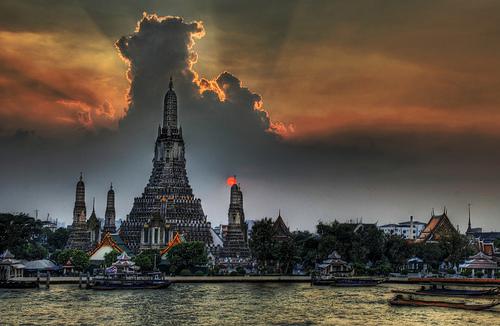
2. Bangkok, Thailand
While Bangkok doesn’t experience the world’s most extreme summer temperatures, it is the world’s hottest city when it comes to year-round intense heat. Temperatures in the Thai capital routinely rise above 40C during the day, with night-time temperatures hovering at similar levels.
Bangkok’s notorious smog is also a problem for those with heat aversion. The megacity’s well-known air pollution traps hot air within the city center, causing daytime humidity and heat that catches many tourists off guard.
3. Las Vegas, Nevada
Situated in the middle of Nevada’s arid desert, Las Vegas experiences temperature extremes like no other US city. Daytime summer temperatures often reach 40°C and occasionally even higher, with the crisp desert heat proving a problem for unprepared tourists and week-long bender participants.
While not the hottest city in North America, Las Vegas is located very close to the hottest location in the entire Western Hemisphere: California’s Death Valley. In 1911, temperature gauges at the park recorded a daytime high of 134°F (56.7C) – just one degree short of the world record.
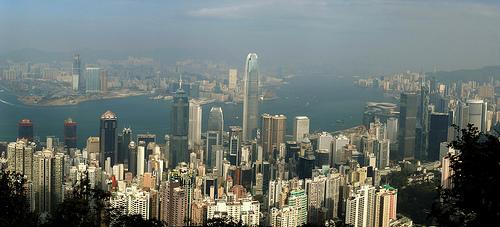
4. Hong Kong, China
Hong Kong isn’t the world’s hottest city. As a matter of fact, it wouldn’t even break the top ten in a list of the world’s hottest points. However, when combined with the city’s legendary humidity, this sauna-style tropical city is one of the world’s most extreme and uncomfortable, especially during its ultra-moist wet season.
Just how bad is it? Bad enough for Hong Kong’s residents to devise specific paths to every possible destination, each of which is designed to follow through as many air conditioned shopping malls as possible. While daytime temperatures tend to fall around 30°C, this ultra-humid Chinese megacity feels more like a steam room than an international metropolis.
5. Mexicali, Mexico
Baja California is home to some truly extreme temperatures, and Mexicali is the city at the center of it all. This metropolis of over one million residents hits 40°C on many summer days, with ultra-hot periods boosting temperatures well above what most residents would consider comfortable.
Due to its inland desert-style location, Mexicali attracts some of the hottest temperatures recorded in Baja California. While Los Angeles, San Diego, and other major population centers along North America’s west coast enjoy year-round warmth, Mexicali’s slight inland placement keeps it free of the Pacific Ocean’s regulated temperature.
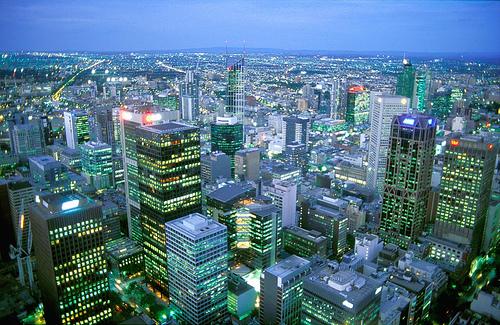
6. Melbourne, Australia
Melbourne is a slight climate anomaly, largely due to its unusual placement between Australia’s cool Southern Ocean coast and the country’s world famous outback areas. While Melbourne doesn’t experience the year-round heat of Darwin, Singapore, or Bangkok, it does experience some summer temperatures that would make even the most hardened outback resident blush.
For example, the February 2009 heatwave saw Melbourne’s temperature exceed 46.4°C – an Australian state capital record. Most months don’t result in a scramble for the air conditioners, as Melbourne’s year-round average temperature is just 19.8°C – a mere 68°F.
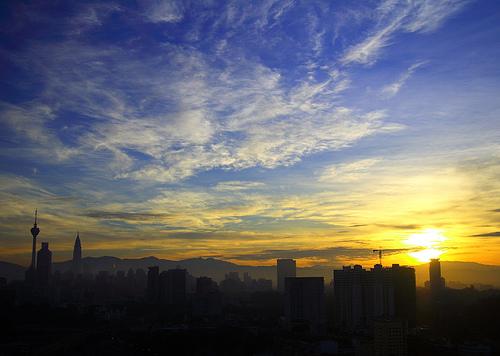
7. Kuala Lumpur, Malaysia
Kuala Lumpur is known for its amazing skyline, huge dining variety, great shopping, and multi-cultural nature. Unfortunately, many visitors remember it for only one thing: the sweltering year-round heat and humidity. Thanks to Kuala Lumpur’s placement almost directly on the equator, the city experiences some of the most intense heat and humidity that Earth has to offer.
While maximum temperatures have never exceeded 37°C, Kuala Lumpur’s 30°C median temperature says a lot about the city. If you’re planning a trip to Malaysia’s large and interesting capital, it might be best to carry a little less clothing than you planned for.
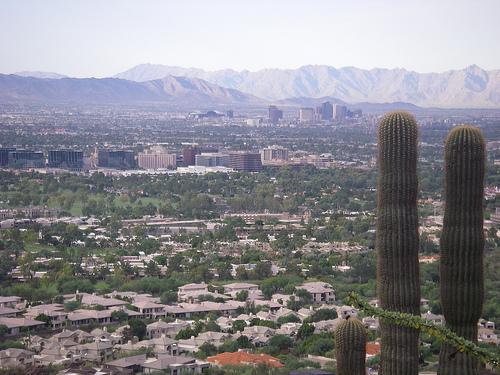
8. Phoenix, Arizona
Phoenix is the United States’ fifth largest city, and by far its hottest, according to information put out by the US Weather Channel. Situated on the edge of Arizona’s Sonoran Desert, temperatures in the city exceed 40°C during the summer, with daytime heat driving many of the city’s residents out of the sun and into their air conditioned homes and offices.
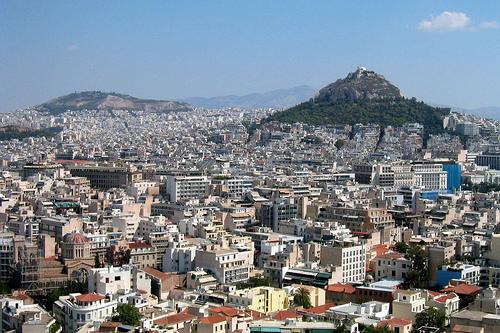
9. Athens, Greece
While Athens was once known for its intense pollution, it’s emerged as a European leader in another category: extreme heat. The Greek capital experiences summertime temperatures in excess of 40°C, and has laid claim to Europe’s all-time temperature record with a July recording of 48°C.
Adding to the problem is the city’s smog. While improved from its 1970s peak, Athens is still shrouded in grey mist on occasion, reducing the city’s ability to moderate temperatures effectively.
10. Cairo, Egypt
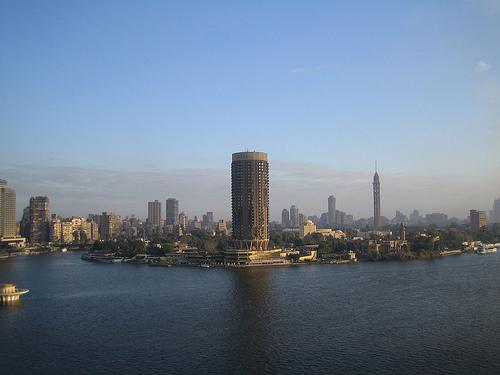
Situated on the banks of the famous Nile River, Cairo is the largest city in Africa and one of the hottest major cities in the world. Due to its placement alongside a major river, Cairo receives both the heat of the major Arabian deserts and the humidity of the Nile River Delta. That means a combination of intense desert heat, often in excess of 40°C, and extreme humidity is on the cards for Cairo’s summertime residents.
 Permessi di Scrittura











Segnalibri